
The Spring-Summer 2026 Fashion Week has reshuffled the deck on several fronts. Between a French decree imposing a minimum share of recycled fibers in new clothing and the rise of hybrid silhouettes inherited from the momentum of the 2024 Olympics, this season’s Parisian collections are responding to new constraints.
The fashion landscape in Paris is no longer just a parade of colors and cuts: it now incorporates regulatory parameters and morphological expectations that brands can no longer ignore.
Certified GRS Regenerated Fabrics: The Constraint Becomes a Creative Argument
Competitors willingly detail color palettes and key silhouettes. They largely overlook the textile shift happening behind the scenes. Since the March 2026 Fashion Week, several Parisian houses, including Chanel and Dior, have increased the share of certified GRS (Global Recycled Standard) regenerated fabrics in their collections.
This choice is not solely marketing. Decree No. 2026-347, published in the Official Journal on March 28, 2026, requires new clothing sold in France to incorporate a minimum proportion of recycled fibers. The supply chains of Parisian fashion shows had to adapt within weeks, resulting in visible trade-offs on the runways: less virgin silk, more recycled polyester worked with haute couture finishes.
For those wishing to explore the Mode in Paris website, this evolution is concretely reflected in an offer where labels increasingly mention GRS certification, including among accessible brands.

The available data does not yet allow for measuring the exact impact on retail prices. However, initial feedback from professional buyers indicates that the additional cost of recycled fibers remains moderate in the mid-range segment. Brands that anticipated this transition have a clear competitive advantage this season.
Hybrid Couture-Streetwear Silhouettes: The Legacy of the 2024 Olympics on Parisian Runways
The field survey by Business of Fashion, published in May 2026, documents a phenomenon made visible by the ephemeral pop-ups in Le Marais: Parisian buyers prefer hybrid couture-streetwear silhouettes. This fusion, born in the wake of the 2024 Olympic Games, has migrated from sportswear to ready-to-wear collections.
Concretely, this translates into structured blazers worn over cargo pants, fluid dresses paired with technical sneakers, or tailored jackets cut from stretch materials typically reserved for sportswear. The contrast between the rigor of the cut and textile relaxation is the signature of this trend.
- Oversized blazer in recycled wool paired with fitted joggers: the most spotted combination during the off shows of March 2026
- Mid-length dress with asymmetrical cutouts, worn with thick-soled sneakers, directly inspired by reimagined Olympic ceremony outfits
- Bomber jacket in GRS-certified technical fabric, cut like a suit jacket: the most radical crossover between the two worlds
Field feedback varies on the sustainability of this trend. Some buyers see it as a fundamental movement linked to a post-pandemic lifestyle change, while others consider it a seasonal peak.
Digital Botanical Prints vs. Animal Patterns: A Parisian Shift
The Trendalytics analysis for the second quarter of 2026 documents a clear shift: digital botanical prints are gradually replacing animal patterns among emerging Parisian designers. In contrast, Italian houses maintain a dominance of classic stripes.
This shift is not trivial. Botanical prints, generated or digitally retouched, allow for nearly infinite customization of patterns. The same fabric can feature variations of flowers, foliage, or plant textures without significant additional production costs. For emerging designers with limited budgets, this technology represents an accessible creative lever.
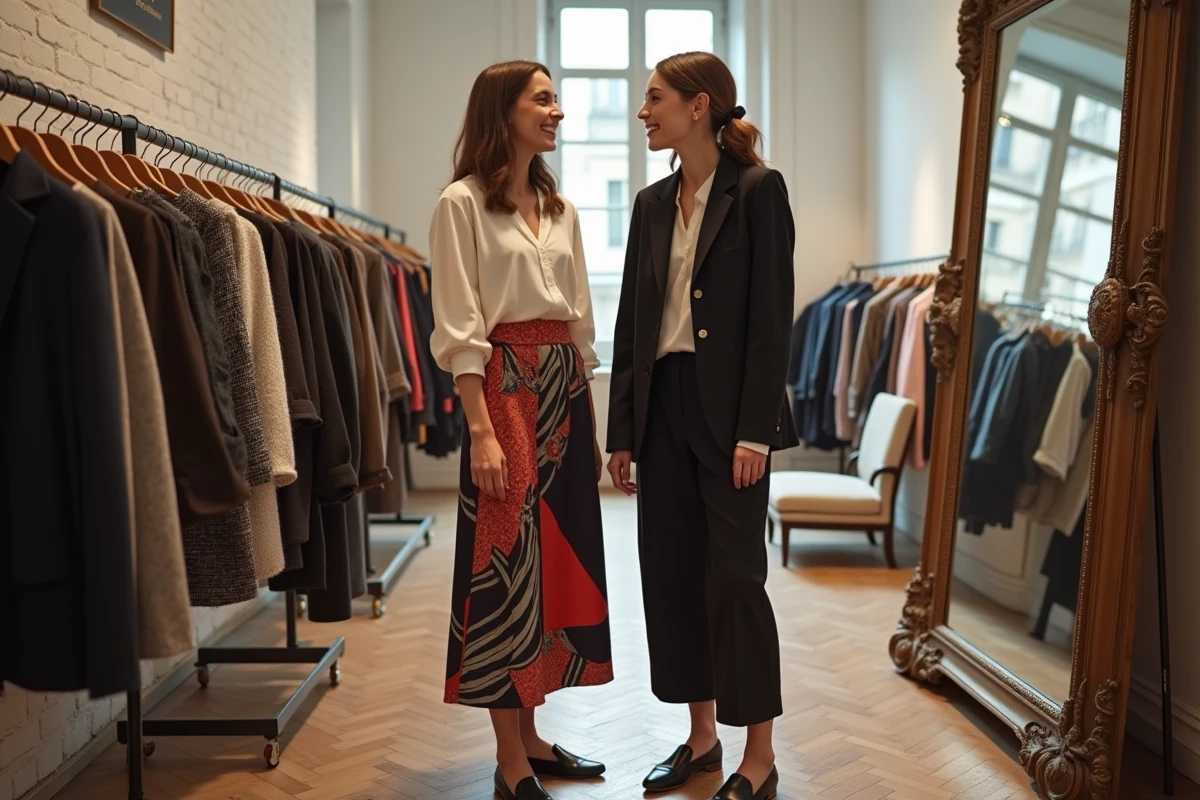
This season’s Parisian runways showcased pieces where the digital botanical pattern covers the entire garment, from collar to hem, with a print resolution that makes each piece visually unique. This approach directly targets buyers looking for unique pieces without a haute couture budget.
Fashion Trends in Paris and Adaptation to Morphologies: What the Runways Don’t Show
The collections parade on models with standardized proportions. The question of how the Parisian trends of 2026 adapt to different body types remains under-documented by specialized media.
Hybrid couture-streetwear silhouettes have an advantage in this regard: cargo cuts and stretch materials fit a wider range of bodies than classic suits. Oversized blazers, by definition, do not constrain the silhouette. Asymmetrical dresses allow for choosing where to place volume.
- Adjustable cargo cuts suit A-shaped bodies (hips wider than shoulders) thanks to the flexibility of side pockets
- The oversized blazer in recycled fabric structures the H-shaped silhouette without marking the waist, suitable for rectangular body types
- Large-scale botanical prints create an optical effect that elongates the silhouette, a relevant option for shorter body types
Data on this subject remains patchy. Parisian brands communicate more about their ecological commitments than about the morphological inclusivity of their cuts. The gap between what is paraded and what is worn daily remains the blind spot of Parisian fashion.
The 2026 season in Paris is marked by the convergence of regulatory constraints, recent cultural legacies, and technological textile mutations. Certified GRS recycled fibers, post-Olympic silhouettes, and digital prints are reshaping a fashion where trends are no longer limited to the visual: they incorporate fabric traceability, cut functionality, and the diversity of bodies that wear them.