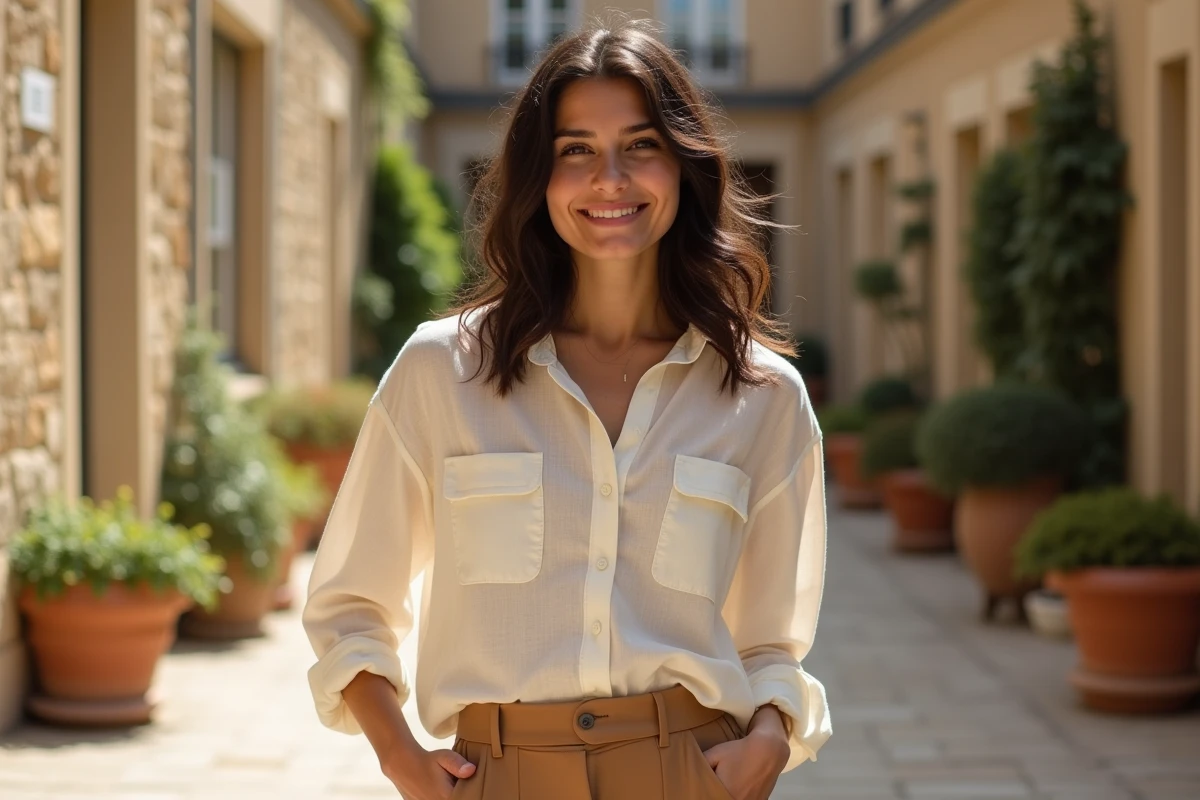
Betul Yilmazturk was named the most beautiful woman in France at the end of a competition based on criteria of facial symmetry and proportions, without resorting to cosmetic surgery. A business student at ISEG in Paris, of Turkish origin, she embodies an atypical profile in a French media landscape where beauty is often associated with uniform standards.
Psychological pressures post-election: what a public designation changes
Receiving a title related to physical appearance exposes one to a form of constant scrutiny. Every social media post, every appearance, becomes an object of commentary. Public idolization coexists with increased personal vulnerability, a phenomenon documented among beauty contest winners for several decades.
The uniqueness of Betul Yilmazturk’s case lies in the nature of the competition. Based on biometric measurements rather than a subjective jury, the title carries a perceived scientific legitimacy. This dimension complicates the ability to take a step back: contesting the result amounts to contesting a method, not a personal taste.
Online reactions illustrate this. Part of the public celebrated the victory as a symbol of inclusivity. Another part denounced the reductive nature of a competition centered on the face. Between these two poles, the designated person must find a balance without institutional guidance, as these competitions generally offer no psychological support post-result. To find photos of Betul Yilmazturk on Beauty Inc, the contrast between editorial spotlight and daily reality becomes tangible.
Turco-French hybrid beauty: a profile that redefines the codes
Betul Yilmazturk’s journey is part of a broader European trend. According to an article in the French Review of Sociology (vol. 67 n°1, January 2026), the concept of hybrid beauty in Europe is gaining ground against monolithic standards inherited from North American contests like Miss America.
This hybridity is not limited to an aesthetic blend. It touches on language, cultural references, and dress codes. Betul Yilmazturk, who arrived in France for her studies, navigates between two visual and social heritages. Her hairstyle, her staging choices on social media, her fashion collaborations reflect this dual belonging without turning it into an explicit marketing argument.
The difference from the classic trajectories of French beauty queens is structural:
- No participation in a regional contest like Miss France, which imposes a codified path and contractual obligations over several months
- A designation based on measurable criteria (symmetry, proportions), which bypasses the system of popular voting or celebrity jury
- A grounding in the Parisian student milieu rather than in the world of entertainment or television
This atypical positioning grants her an editorial freedom that traditional winners do not always have. No exclusivity contract dictates her statements, making her relationship with brands and media more unpredictable.
Natural beauty contests in France: a shift towards inclusivity
Since 2024, events celebrating ethnic diversity and beauty without surgery have multiplied in France. The contest that propelled Betul Yilmazturk is part of this movement, driven by the gradual decline of trust in retouched standards.
A field study by Kantar Media France dated April 2026 notes a shift among influencers: makeup partnerships are declining in favor of clean beauty products since mid-2025. This shift reflects a public demand for less transformed faces, more transparent routines. Betul Yilmazturk seems to anticipate this turn in her recent Instagram posts, even if traditional media have not yet reported on it.
The European Union is supporting this evolution through regulation. Since January 2026, claims related to natural beauty are subject to mandatory checks to avoid greenwashing. Sanctions are strengthened, including for affiliate sites promoting icons like Betul without meeting the new transparency requirements. The European regulatory framework now imposes traceability of beauty claims, which alters editorial practices around these profiles.
Betul Yilmazturk and Parisian fashion: a personal style in development
The elegance associated with Betul Yilmazturk does not stem from a background in styling. Her fashion approach draws from both Parisian codes (clean cuts, sober palette) and more personal elements linked to her origins and generation.
On social media, her hair choices often come up in discussions. The hairstyle, the natural volume of her hair, the apparent refusal of systematic straightening contribute to an image consistent with the title she received. This consistency is not trivial: in an industry where collaborations often dictate style, maintaining a personal line requires constant arbitration between visibility and authenticity.
Brands interested in her profile see a bridge to a young, urban audience sensitive to cultural diversity. Betul’s communication talent lies less in the frequency of her posts than in their tone, which avoids a direct promotional register in favor of a more personal visual narrative.
Betul Yilmazturk’s journey remains a work in progress. Her profile, at the intersection of the student world, fashion, and an atypical beauty title, does not fit into any pre-existing box in the French media landscape. It is precisely this absence of a box that makes her trajectory difficult to predict, even for observers accustomed to the mapped-out paths of traditional contests.