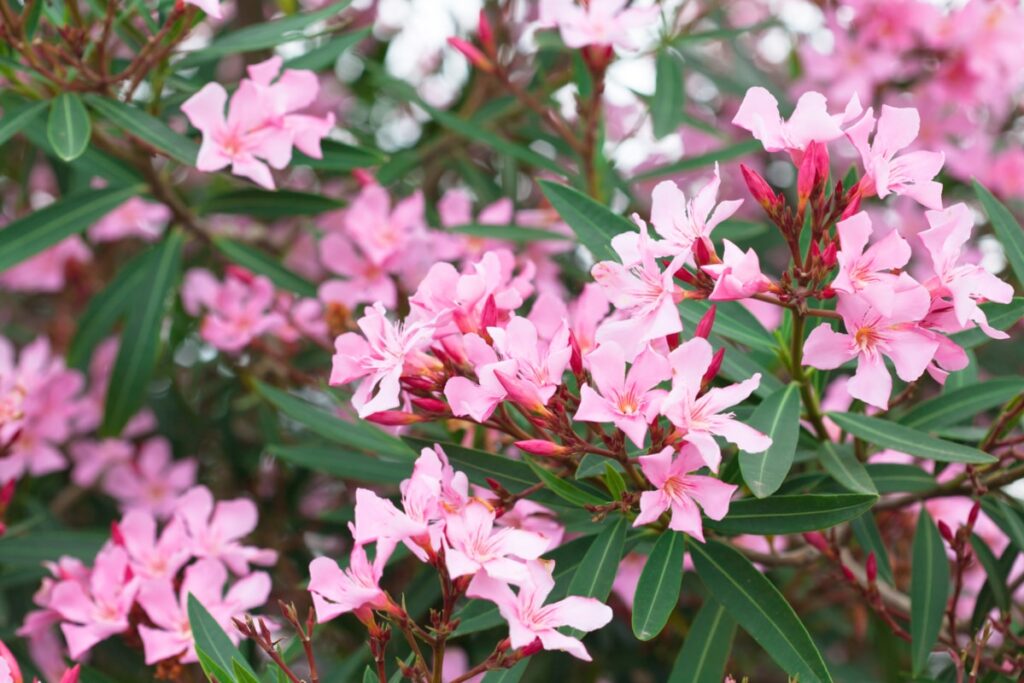
It is a shrub that often makes us dream. The oleander (Nerium oleander) evokes both the Atlantic coast, the South, warmth, sunshine, the colorful scallops of the North African wadi, the Greek island of Santorini, Corsica, etc. You can also enjoy it north of the Loire, but it’s more difficult because it’s cold.
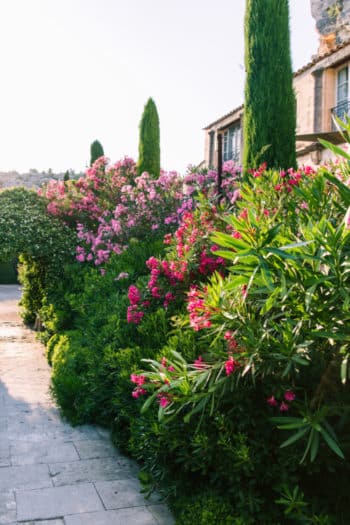
©gdmoonkiller
The perfect shrub where it’s warm
In fact, if we think about it for two minutes, there isn’t much to say about Nerium oleander. It’s a festival of flowers in summer, a not too expensive decorative terrace in a pot, an excellent windbreak thanks to its tight stems, its tough and evergreen foliage. Add to that some varieties have a bit of fragrance. It comes in dwarf or large varieties. It’s very easy to prune. So, what’s the flaw? Ah. Yes… hardiness! Below -5°C, it’s goodbye Balthazar!
Beware, toxic plant!
All parts of oleanders are toxic. Teach young ones early not to touch the plant. Don’t touch it, don’t test the taste of the leaves. Even ingested in small doses, oleander is toxic. The consequences range from vomiting to heart problems. In case of ingestion or suspicion of ingestion, contact the poison control center or the emergency room.
Oleander, cultivation sheet
- Latin name: Nerium oleander.
- Soil: any type of draining, rich soil, but not too much.
- Exposure: absolutely in the sun.
- Watering: in the ground, it can learn to do without it.
- Pot cultivation: essential watering, once or twice a week. Watering will make it bloom more. You can also give it liquid fertilizer every 15 days.
- Dimensions: 0.6 m for compact cultivars up to 6 m if the oleander is allowed to live in hedges.
©Sokolenko
- Pruning: at the end of winter, reduce the branches by a third. Each year, remove one of the five old branches. If frost or cold wind has damaged the foliage, be drastic, remove anything unsightly and damaged. It will regrow. For this operation, protect your eyes and hands.
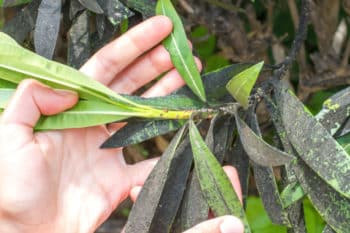
- Enemies: Mainly mealybug. And where there is mealybug, there is honeydew, sooty mold, and a very ugly shrub. In case of infestation, spray with liquid black soap (5 tablespoons of soap for 1 L of hot or room temperature water).
How to protect oleanders in winter?
This precaution is necessary wherever frosts can exceed -5°C. In the ground, do with what you have: a layer of leaves, straw at the base, and winter cover for the aerial parts. Pot cultivation: if the pot can be moved, winter in a bright room, reduce watering, you will take it out in spring. If the pot is not movable, surround the container with a good layer of bubble wrap and protect the foliage with a winter cover.
When and how to prune the shrub?
©beodra
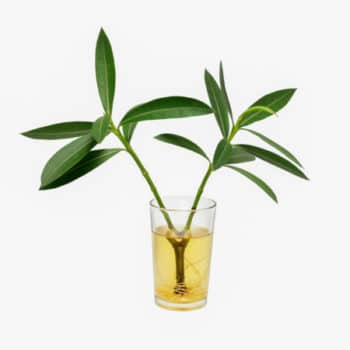
Nothing could be simpler! The oleander is cut in water in August.
- With a disinfected pruner, cut the tips of healthy twigs (about twenty centimeters). The cuts should be sharp.
- With a knife or grater, remove some of the leaves starting from the bottom of the cutting. Keep 5 or 6 leaves at the top.
- In a transparent container (size to be adjusted according to the number of cuttings taken), set up a large mesh trellis and slide the cuttings in. Before placing the cuttings, put a small piece of charcoal at the bottom of the container.
- When the cuttings have developed roots, plant them in individual pots (garden soil with a bit of sand or horticultural soil). Wait until the following spring to plant them in the garden or in a pot on the terrace or balcony.
 |
DEAR GARDENERS, DID YOU KNOW THAT YOU CAN FIND BEAUTIFUL TOOLS, NATURAL FERTILIZERS, PLANT KITS TO INTRODUCE YOUR FRIENDS TO GARDENING, AND 1000 OTHER THINGS IN THE HORTUS FOCUS SHOP? |
Tag: oleander diseases