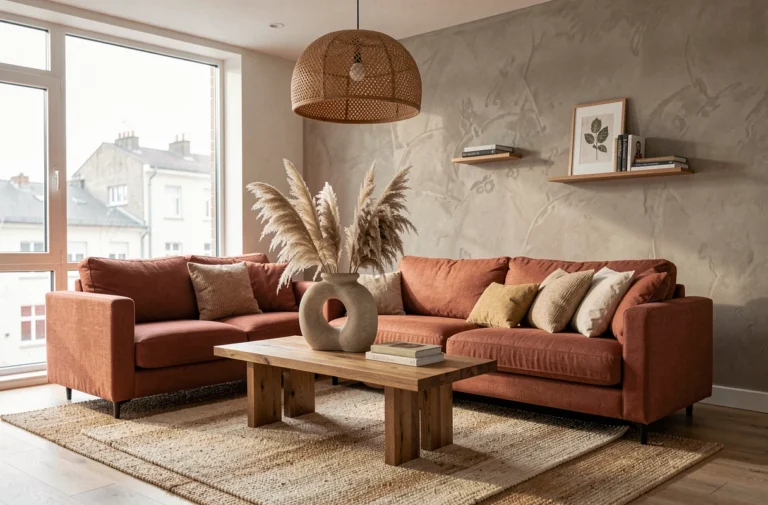
Creating a harmonious interior means making choices that go beyond a simple color palette. Materials, air quality and the life cycle of furniture: every decorating decision has a tangible impact on daily life and the home environment. Comparing these factors helps distinguish the choices that really matter from those that are merely cosmetic.
Indoor emissions and home decor: what labeling covers (and what it misses)
Paints, adhesives and floor coverings sold in France carry a regulatory label indicating their emissions of volatile organic compounds, rated from A+ (very low emissions) to C. This rating can help guide your choice of wall finish or flooring.
New furniture, however, is not covered by this label. A piece made from particleboard may release formaldehyde for weeks after installation, with no standardized indicator available to help buyers compare two products.
| Decorative item | Emissions label (VOCs) | Main substance to watch for | Additional step |
|---|---|---|---|
| Wall paint | Yes (A+ to C) | Residual VOCs | Ventilate during and after application |
| Flexible floor covering | Yes (A+ to C) | Formaldehyde, phthalates | Check for an A+ rating |
| New furniture (panels) | Not covered | Formaldehyde | Ventilate the room for several weeks |
| Vintage or second-hand furniture | Not applicable | Emissions have already dissipated | Clean and restore |
| Candles, incense, diffusers | Not covered | Fine particles, VOCs | Limit use and ventilate |
This table highlights a rarely mentioned difference: second-hand furniture has already released most of its emissions, making it a smart choice for both health and style. To explore home decor by Imagin’Air Déco, this focus on simplicity and character can also be found in approaches that make the most of existing materials.
Furniture reuse and take-back rights: two channels not to confuse
Personalizing a home without buying lots of new items often means shopping second-hand. Data reported by Ecomaison for 2025 shows that reuse accounts for only a small share of the furniture collected, compared with energy recovery. In other words, most furniture dropped off at waste collection centers does not get a second life: it is burned to produce energy.
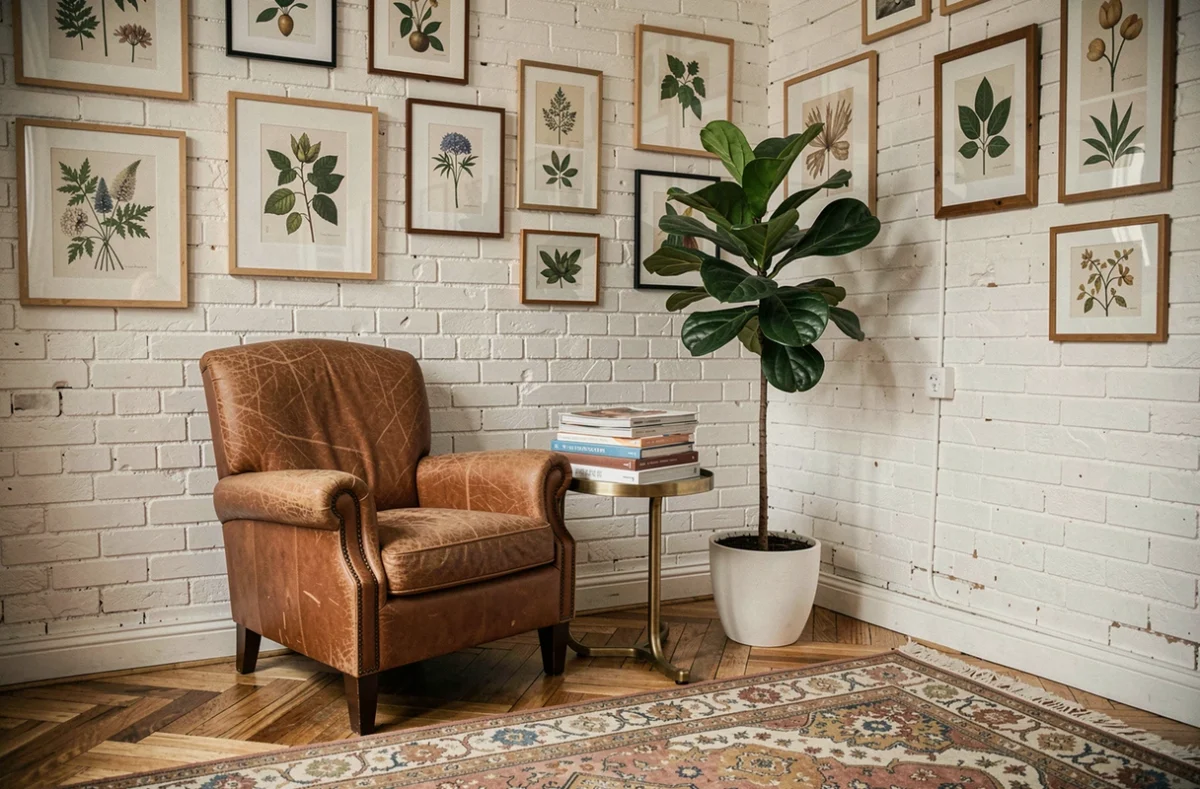
Buying or giving away furniture that is still usable is therefore different from sending it to a recycling stream. Finding a solid wood 1960s dresser at a reuse center both avoids the emissions from new formaldehyde-containing furniture and keeps an item out of the destruction process.
Take-back rights: an overlooked option
When a retailer delivers a new piece of furniture, they must take back an equivalent used item free of charge. This right exists, but a DGCCRF investigation found that more than half of the businesses inspected were failing to comply. In practice, request the take-back when placing your order, in writing, and check that the delivery note mentions collection.
This system makes it possible to update a room without piling old furniture up in the garage, while ensuring that the collected item enters an organized reuse or recycling stream.
Personalized home decor: choices that tell a story
Online competitors go into great detail about color palettes and the 60-30-10 rule. These principles are useful, but they are not enough to create a space that feels like home to the people who live there. An interior’s personality comes from tangible choices that no color chart can capture.
Raw materials instead of decorative accessories
A tabletop made from reclaimed oak from an old workbench adds more character than ten matching cushions. The wood’s texture, signs of use and patina tell a story that a smooth, brand-new object cannot imitate.
- Old solid wood furniture (dressers, sideboards, tables) retains a density and grain that engineered wood panels cannot replicate, and its chemical emissions have already dissipated.
- Handcrafted ceramics (displayed tableware, vintage tiles) introduce visual irregularities that break up the uniformity of a standardized interior.
- Undyed natural textiles (raw linen, undyed wool, hemp) add depth without relying on synthetic dyes that may release VOCs.
Light and texture instead of air fresheners
Scented candles, incense and room sprays contribute to fine-particle and volatile organic compound emissions. Contrary to a common misconception, they do not purify the air. To create a sensory atmosphere without this trade-off, natural light and tactile textures are safer alternatives.
An antique mirror placed opposite a window reflects light around the room. A thick wool throw draped over a vintage armchair invites you to reach out and touch it. These elements create an atmosphere without compromising indoor air quality.
Color palette and cohesion: beyond the theoretical rule
Limiting your palette to three dominant shades is still a reliable guideline for a harmonious interior. What many guides leave out is how vintage or second-hand materials can fit into that palette.
A dark walnut piece of furniture brings a warm brown tone. Vintage terracotta tiles add a muted orange. Starting with the objects you already own to define your palette reverses the usual approach (choosing colors first, then buying furniture) and leads to more personal combinations.
- Identify the dominant shades in furniture you already own or have found second-hand before choosing wall paint.
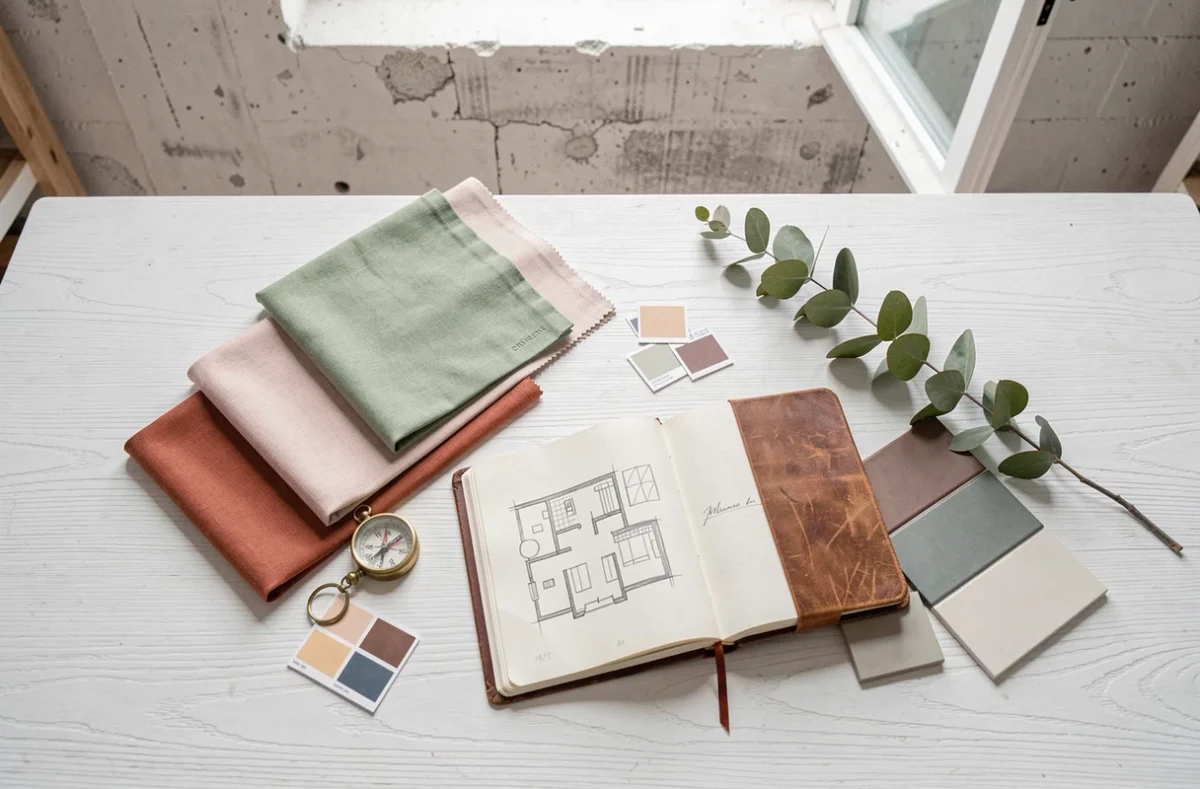
- Use a fabric swatch or tile as a reference for your color chart rather than a catalog.
- Embrace variations in tone between vintage pieces: that interplay is what makes a home feel lived-in rather than simply decorated.
An interior that tells a story does not come together in a single shopping trip. It takes shape over time, with objects that have already lived a life, materials whose emissions have dissipated, and choices that prioritize durability over novelty. The first step is not to buy, but to take stock of what you already have at home.