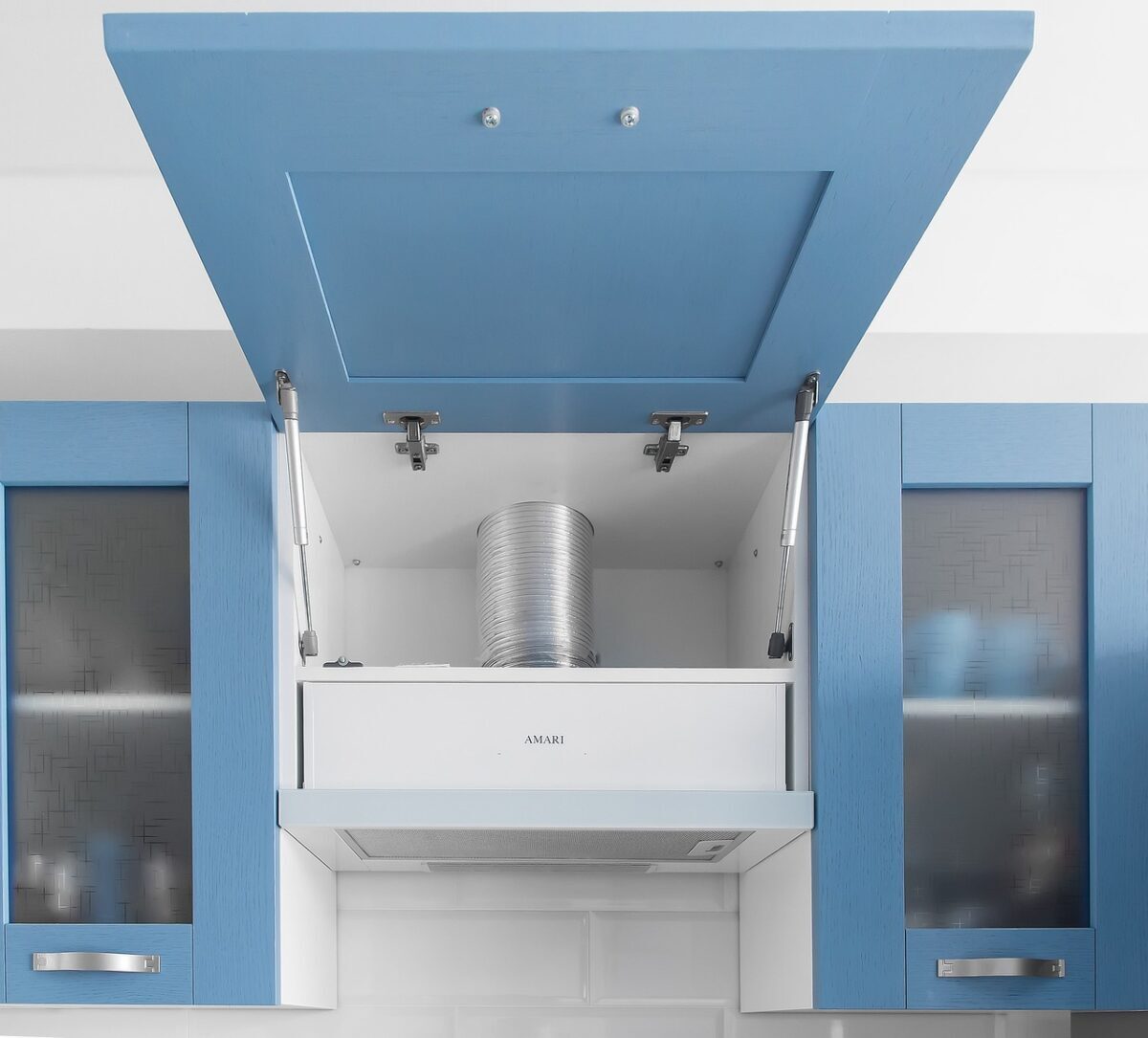
Kitchen hoods are essential devices for maintaining a healthy environment while preparing meals. Traditionally, these hoods are equipped with powerful motors that suck in smoke, odors, and steam. However, there are motorless models that operate in an innovative way.
How It Works
The motorless hood, often referred to as natural or passive hoods, relies on the principle of convection to expel odors and cooking particles. Unlike motorized hoods that use a fan to create airflow, motorless hoods depend on the natural circulation of air.
Natural Convection
Natural convection occurs when warm, lighter air rises and is replaced by cooler, heavier air. In the case of a motorless hood, the heat generated by cooking causes the warm air to rise. This upward movement creates a pressure difference that draws air from the kitchen into the hood. This process allows air laden with odors and particles to escape naturally to the outside.
Design and Materials
Motorless hoods are generally designed with materials that promote odor absorption. Stainless steel, glass, and aluminum surfaces are common, as they are easy to clean and heat-resistant. Some hoods also use activated carbon filters to neutralize odors. These filters work by adsorbing odor-causing particles present in the air, thereby improving air quality.
Advantages of Motorless Hoods
Energy Savings
One of the main advantages of motorless hoods is their energy efficiency. Since they do not require electricity to operate, they represent a more eco-friendly and economical solution. This also helps reduce the kitchen’s energy consumption, which is beneficial for the environment.
Quiet Operation
Motorless hoods are generally silent. The absence of a motor eliminates the noise often associated with traditional hoods. This allows for cooking in a quieter environment, which can be particularly appreciated during family or friends’ meals.
Ease of Installation
Installing a motorless hood is often simpler than that of a motorized model. There is no need to run electrical cables or create a complex exhaust duct. This can make these hoods more accessible for homeowners looking to renovate without hiring professionals.
Disadvantages of Motorless Hoods
Limited Efficiency
Despite their many advantages, motorless hoods have limitations. Their efficiency largely depends on environmental conditions. For example, in very large or poorly ventilated kitchens, natural aspiration may not be sufficient to effectively eliminate smoke and odors. Users should therefore be aware of the limitations of this type of hood.
Regular Maintenance
Motorless hoods require regular maintenance to ensure proper functioning. Activated carbon filters must be replaced periodically, and surfaces need to be cleaned to avoid the buildup of grease and dirt. This can be a drawback for some users who prefer solutions that require less maintenance.
Initial Cost
Although motorless hoods can represent energy savings in the long term, their initial cost can be a barrier. Depending on the design and materials, the price of a motorless hood can be similar to or even higher than that of a motorized hood. Buyers should therefore evaluate their budget and needs before making a choice.