
A cat meowing in front of a closed door doesn’t always want to go out. Sometimes, it signals digestive discomfort, anxiety related to a change in the home, or simply a need for contact. The difference between these situations can be seen in details that most of us overlook: the position of the ears, the tension of the tail, the rhythm of blinking.
Understanding and communicating with animals on a daily basis starts with this fine observation, well before any specific technique.
Micro-body signals: what your dog or cat expresses without sound
We often think we know our pet well because we’ve lived with them for years. In reality, we miss a large part of what they express. Recent work in cognitive ethology shows that the level of mutual understanding depends on the ability to recognize the animal’s emotions, far beyond basic body signals like tail wagging or purring.
In dogs, ear movements are an underestimated indicator. Ears pinned back do not always mean fear: when combined with a relaxed body and a low but mobile tail, they can indicate friendly submission. Conversely, upright ears with a rigid body signal heightened vigilance, not curiosity.
For cats, facial tension is a reliable marker. A cat with whiskers pointing forward is in exploration or predation mode. When they are pressed against the cheeks, it is protecting itself or feeling discomfort.
These micro-signals, still very little popularized in mainstream content, are documented by ethologists and accessible to anyone who takes the time to observe. To explore more about the behavior specific to each species, animals on Syntonie Animale offer resources categorized by type of animal.
Essential species needs: the foundation before any animal communication
International veterinary associations (AVMA, WSAVA) updated their behavioral guidelines in 2023-2024. Their conclusion is straightforward: behavioral issues decrease significantly when we first address fundamental needs rather than isolated communication techniques.
In practical terms, a dog that destroys things in your absence does not need us to “talk better” to it. It likely needs more exploration, chewing, and cognitive stimulation. A cat that urinates outside its litter box is not trying to “communicate a message of rebellion”: it most often signals environmental stress or a medical issue.
Fundamental needs to check first
- Daily exploration: a dog needs to sniff, not just walk. A thirty-minute walk where it can explore freely is better than an hour of walking at heel on the sidewalk.
- Chewing and simulated predation: providing chew toys, food puzzles, or treat-seeking sessions helps channel natural behaviors that are often suppressed.
- Undisturbed rest: an animal without a calm area to retreat to accumulates stress. Feedback varies on this point, but most behaviorists recommend a dedicated space, inaccessible to children and other animals.
- Appropriate social contacts: a solitary cat does not have the same needs as a cat raised with peers. Forcing cohabitation without a gradual adjustment period generates lasting conflicts.
As long as this foundation is not in place, no communication technique will produce stable results. This is a point that animal communication-focused websites rarely mention.
Calming signals in dogs: how to read and respond to them
Calming signals are a vocabulary in their own right. They are often confused with disobedience or indifference. A dog that turns its head when called is not ignoring you: it is telling you that it perceives tension and is trying to defuse it.
Here are the most common signals and their practical meanings:
- The yawn out of context of fatigue: a sign of moderate stress. If your dog yawns at the vet or when you raise your voice, it is trying to calm itself and you.
- The repeated licking of the nose: often visible in the presence of an unfamiliar dog, it indicates social discomfort. It is better to increase the distance rather than force the encounter.
- The turning away of the gaze or the entire body: this is active communication, not disinterest. By responding with the same gesture (briefly turning away your gaze), you confirm to the animal that you received its signal.
Responding to calming signals significantly reduces conflict situations. We observe dogs that are more relaxed on walks, less reactive to peers, and overall more cooperative in learning.
Adapting your posture and voice: practical communication in daily life
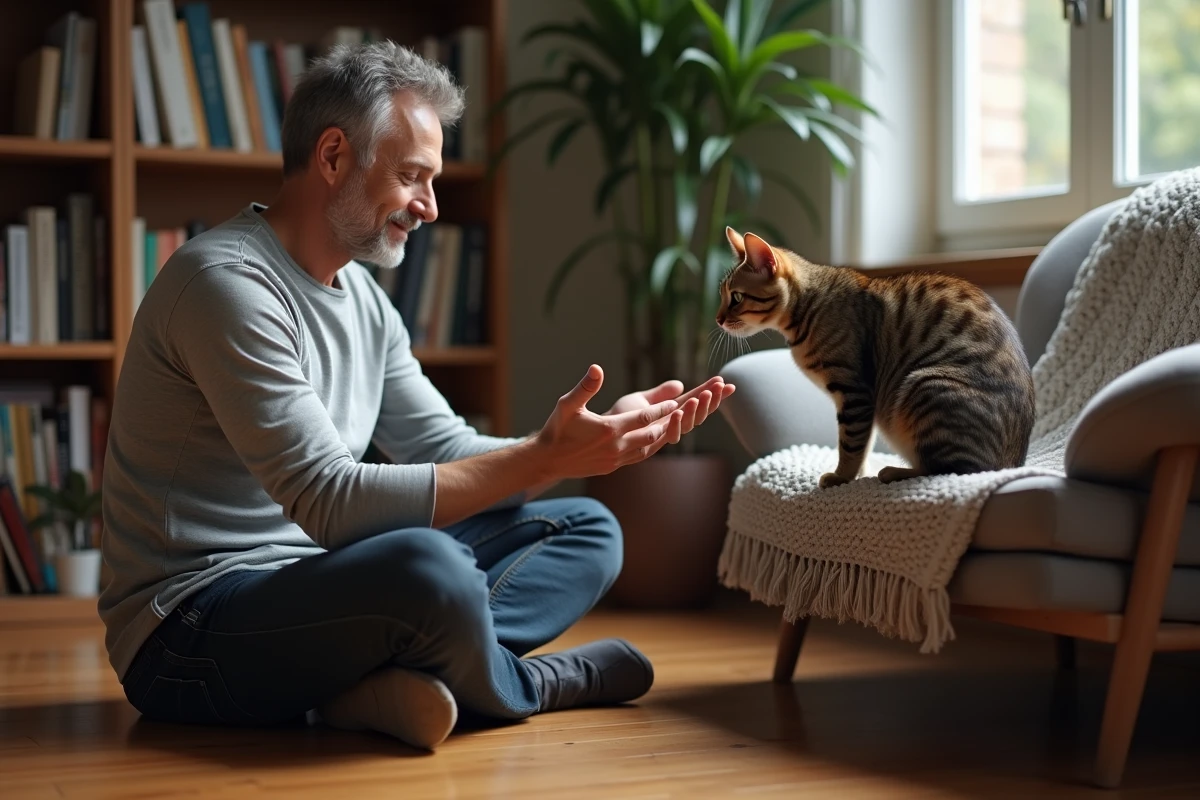
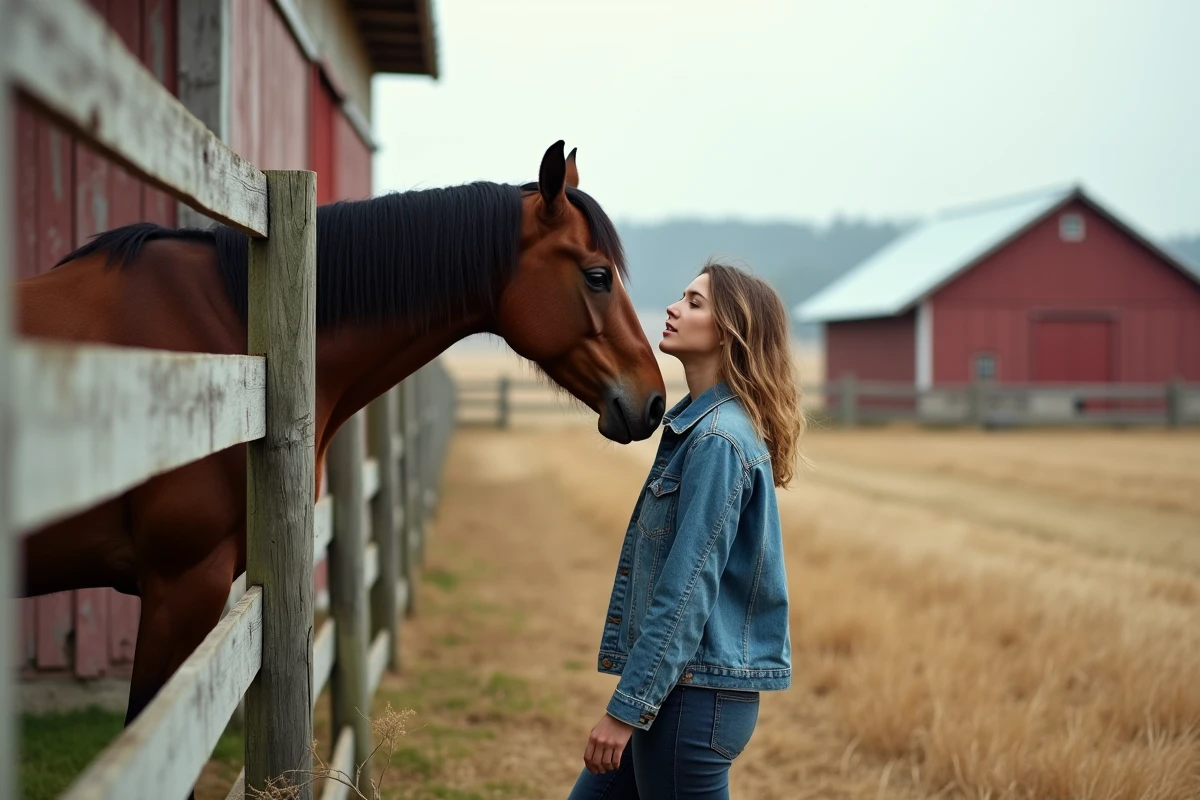
The way we stand in front of an animal changes its response. Leaning over a dog to pet it on the head is a gesture perceived as threatening by most individuals, even those who tolerate it out of habit. Squatting sideways and extending your hand palm down gives the animal the choice to come or not.
The voice plays an equally concrete role. High-pitched and fast tones excite, while low and slow tones calm. To call a dog on a walk, a rising and cheerful voice works better than a sharp command. To calm a stressed animal in the car or at the vet, a low and steady tone has a measurable effect on its heart rate.
The case of children and animals
Experts now recommend joint child-animal education programs to prevent bites and scratches. A child running towards an unfamiliar dog while screaming does not show affection from the animal’s perspective: it triggers a stress sequence. Teaching children to wait for the animal to come to them radically transforms the safety of interactions.
Better understanding and communicating with animals does not require any special gift or long training. Observing fine postures, respecting species needs, adjusting one’s own posture and voice: these simple gestures, applied consistently, change the quality of daily relationships. The hardest part is not learning a new language, but unlearning our human reflexes.