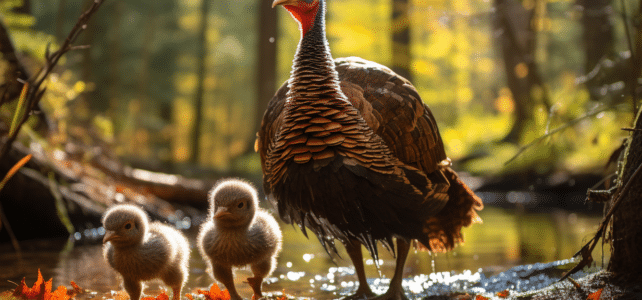
In the early hours of their existence, young galliforms, such as partridges, pheasants, and quails, embark on a captivating journey of growth and learning. From the moment they hatch, these chicks are already fluffy and surprisingly independent, ready to follow their mother and face the challenges of their natural habitat. Their development is a complex process, marked by the rapid acquisition of essential skills for their survival. This critical phase of their life is fundamental, as it determines their ability to feed, evade predators, and adapt to the whims of their environment.
The First Steps in the Wild: Hatching and the Early Days of Young Galliforms
The hatching of galliforms is a defining moment, marking the beginning of a life driven by the imperative of survival. After an incubation period that can vary depending on the species, the chicks break through the eggshell using their egg tooth, a horned protrusion located on their beak. This first act of autonomy is the prelude to a series of challenges that the young birds will have to face with remarkable speed.
During the first days following hatching, the young galliforms, already equipped with downy feathers, demonstrate an unwavering instinct to follow. They gather around their mother, model and protector, who teaches them the basics of foraging. The development of wild chicks is thus punctuated by the discovery of food sources, such as insects and plants, essential for their growth.
The birth of wild birds in their natural environment comes with vulnerability to predators and climate fluctuations. Yet, these seemingly fragile creatures possess a resilience and adaptability that is truly admirable. As the hours pass, juvenile galliforms learn to move with more confidence, honing their reflexes and camouflage skills.
Among these young ones, the baby pheasant stands out for its liveliness and agility. It exemplifies the precocity of galliforms, which, although recently hatched, already show skill in evading threats and integrating the behaviors necessary for their flourishing in the wild. These early stages of life are the stage for intensive learning, where each experience shapes the future adults that these chicks will become.
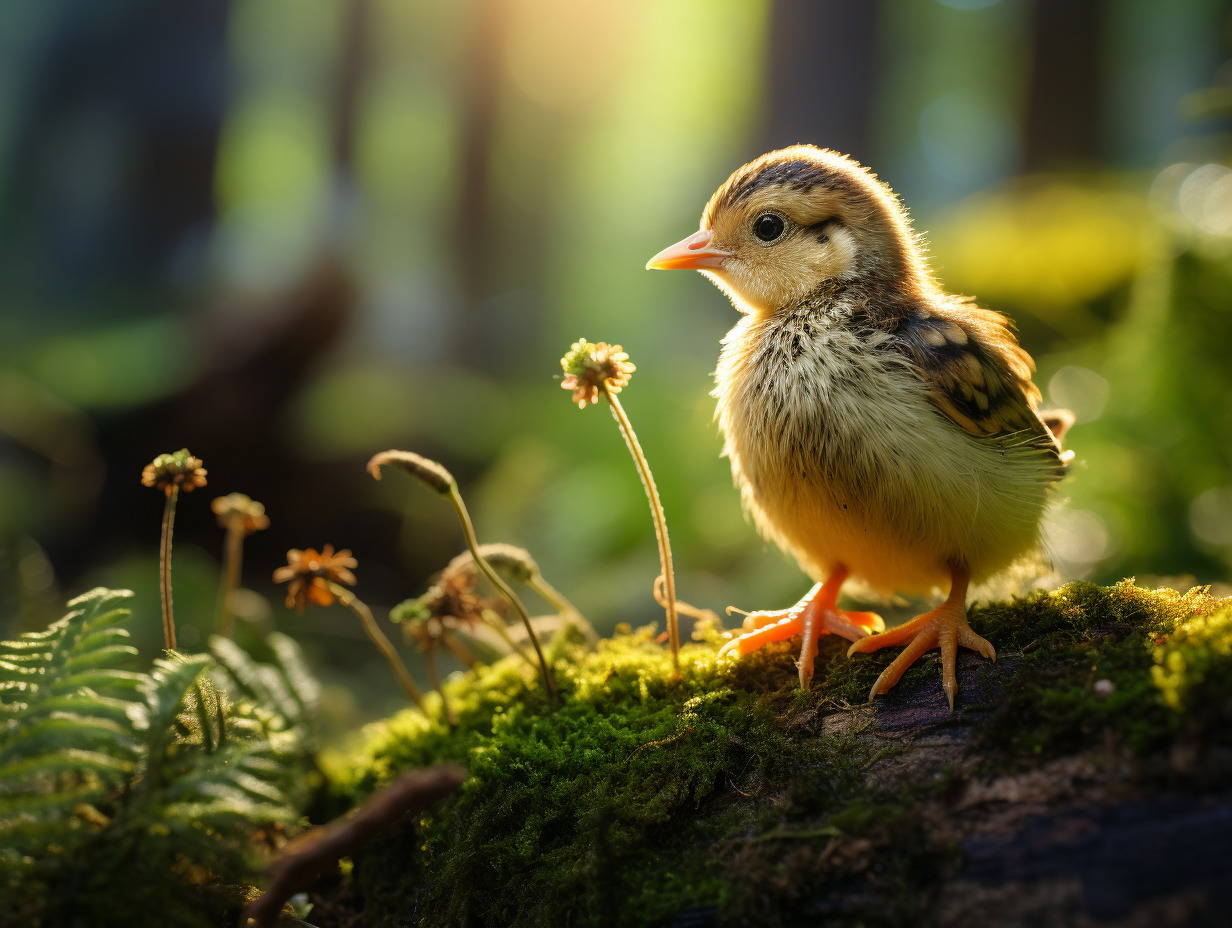
Survival and Learning Strategies in Young Galliforms
Faced with the multiple dangers of their environment, young galliforms develop survival strategies from the very first moments of their lives. Learning is rapid, leading them to identify threats and react appropriately. Their behavior, both innate and learned, continuously adjusts, thus providing the chicks with the necessary tools to navigate the complex ecosystem they inhabit. The survival strategy of galliforms partly relies on imitation of adults: the chicks observe and replicate the camouflage and escape techniques that will be crucial for their survival.
Learning in these young birds is not limited to risk management. It also encompasses knowledge of their territory, food selection, and recognition of their species’ communication signals. The behaviors of juvenile galliforms evolve with remarkable plasticity. This ability to adapt, adjust their behavior, and integrate into the social structure of their group will be decisive for their success as adults. They become familiar with hierarchies, courtship rituals, and specific calls that govern interactions among peers.
Adaptation to the natural environment is also facilitated by biological mechanisms. The bodies of juvenile galliforms transform, strengthening, gaining mobility and resilience. Natural selection favors individuals best suited to face environmental challenges. The adaptation of galliforms to nature is thus a subtle combination of physiological and behavioral changes, which together forge the identity of these resilient inhabitants of our wildlife.