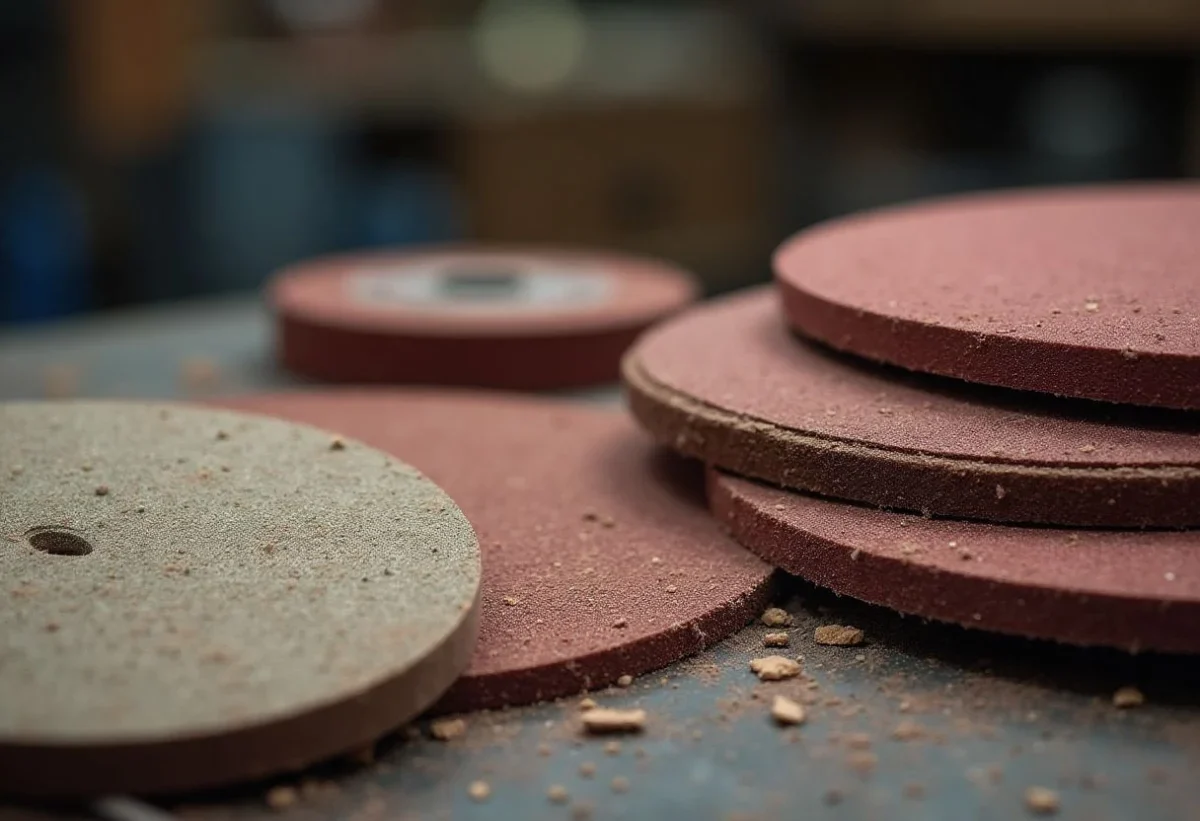
Abrasives are ubiquitous materials that are often overlooked, playing an essential role in many industrial and artisanal sectors. Whether for polishing, smoothing, or cutting, they are involved in a multitude of manufacturing and maintenance processes. Etymologically, the term “abrasive” comes from the Latin “abradere,” which means to shave or scrape. This origin perfectly highlights the primary function of these materials: to wear away or remove material through friction.
The Different Categories of Abrasives
In the vast world of abrasives, several types stand out based on their composition, use, and effectiveness. The diversity of these materials allows tools to be adapted to specific tasks, thus ensuring optimal results.
- Natural abrasives: this group includes pumice, sand, and quartz. Used for millennia, these materials offer remarkable effectiveness for polishing and smoothing tasks on various surfaces.
- Synthetic abrasives: they are manufactured using advanced industrial processes. Some examples include silicon carbide and aluminum oxide. These materials are prized for their robustness and ability to withstand high mechanical stresses.
- Bonded abrasives: composed of abrasive grains bonded by a matrix, these abrasives are often used in the form of discs or wheels. They allow for very effective cutting or grinding action.
Industrial and Artisanal Applications of Abrasives
Abrasives are at the heart of many industrial and artisanal operations, transforming raw materials into finished products of admirable precision and quality.
In the industrial sector, abrasives are used for polishing metals, cutting hard materials, and finishing complex surfaces. For example, in metallurgy, abrasives like silicon carbide are essential for refining and shaping metal parts.
On the artisanal side, craftsmen often use abrasive paper for finishing furniture, restoring antique objects, or creating artistic pieces. These materials allow for smooth and uniform surfaces, essential for a quality finish.
Technological Innovations and Their Impact on the Abrasives Market
With the constant evolution of technologies, the abrasives market continues to transform, integrating innovations that push the boundaries of efficiency and durability.
- Nanotechnologies are revolutionizing the design of abrasives, enabling the production of finer and more uniform grains, thereby optimizing tool performance.
- The growing use of 3D printers has led to the creation of customized abrasives, precisely tailored to the specific needs of industries and artisans.
- Environmental concerns are driving the creation of more eco-friendly abrasives, made from recycled or biodegradable materials.
Exploring the abrasives sector reveals an industry in perpetual transformation, where tradition and innovation intertwine to offer increasingly efficient solutions. Whether for large-scale industrial uses or more modest artisanal applications, abrasives remain indispensable allies for transforming and shaping the material world around us.