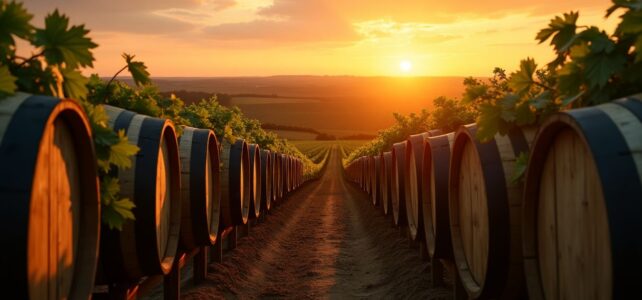
Burgundy red wine embodies an exquisite fusion of centuries-old tradition and meticulous craftsmanship. Nestled in the heart of France, the Burgundy region is world-renowned for its prestigious vineyards and exceptional grape varieties. Wine lovers, whether novices or experienced, find in Burgundy wines a wealth of flavors and aromas that capture the very essence of French viticulture. From delicate Pinot Noir to the complex subtleties of the terroir, each bottle tells a unique story.
The Historical Origins of Burgundy Red Wine
Burgundy is a wine region steeped in history. Its vineyards date back to antiquity, where, under Roman influence, the first vines were planted. The region was later marked by the intervention of monks in the Middle Ages, who played a fundamental role in the development of viticulture techniques. These religious orders, notably the Cistercians, established clos and plots that endure to this day.
- The Romans, initiators of viticulture in Burgundy, introduced winemaking expertise to the region.
- Monks of the Middle Ages, guardians of the viticultural arts, perfected cultivation and winemaking methods.
- The clos, a legacy of the Cistercians, are still famous and sought after worldwide.
The Must-Try Terroirs and Appellations of Burgundy
The diversity of terroirs in Burgundy is one of the keys to the richness of its wines. Each plot, each hillside possesses characteristics that influence the taste and aroma of the wines. The appellations, for their part, are guarantees of quality that reflect the prestige of the region. Here are some emblematic appellations that contribute to the fame of Burgundy red wine:
- Gevrey-Chambertin: Known for its robust and structured wines, it offers a rich aromatic palette.
- Nuits-Saint-Georges: Appreciated for its fruity and spicy notes, it is a quintessential wine for aging.
- Vosne-Romanée: Synonymous with finesse and elegance, it charms the most delicate palates.
The Grape Varieties and Winemaking Methods
Pinot Noir reigns supreme over Burgundy’s red wines. This capricious and delicate grape variety requires special attention and in-depth expertise. Winemaking in Burgundy is distinguished by a respectful approach to the grape and terroir. The winemakers, true artisans, favor natural fermentation and limit the use of intrusive technologies.
Among the common practices are:
- Fermentation in oak barrels, which adds complexity and structure to the wine.
- A prolonged aging, enhancing the aromas and providing a beautiful roundness on the palate.
- The meticulous selection of berries, ensuring impeccable quality.
Food and Wine Pairings: Elevating Burgundy Red Wine
A Burgundy red wine is ideally enjoyed with dishes that highlight its subtleties. Food and wine pairings are an art that enhances the gastronomic experience.
To accompany a Burgundy red wine, here are some suggestions:
- Roasted poultry, delicately seasoned, pairs wonderfully with the wine’s fruity notes.
- Mushrooms, whether in sauce or as a side, bring out the earthy aromas typical of Burgundy.
- A mature cheese like Reblochon or Brie, for a perfect harmony between creamy texture and the wine’s structure.