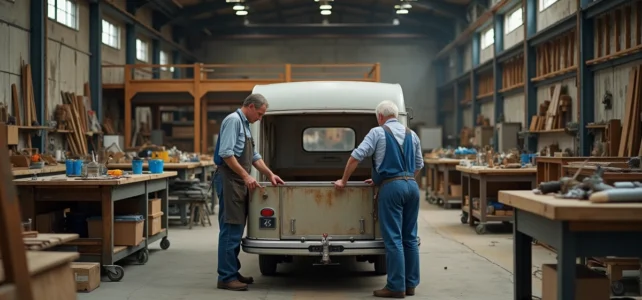
Rubis is not a ghost brand. It is a brand of the Trigano group, positioned in a niche that most of the group’s ranges do not cover: the permanent living caravan. This distinction, often misunderstood, explains why Rubis remains discreet in mainstream catalogs while maintaining a real presence on the ground.
Rubis construction structure: hybrid wood-composite frame and rot-proof shield
What sets Rubis apart from other Trigano ranges primarily lies in the design of the walls. The frame is based on a combination of solid wood and composite, where the wood provides mechanical strength and the composite ensures longevity against moisture. This structural choice is not trivial: it targets prolonged residential use, not seasonal caravanning.
All materials in contact with the outside are rot-proof. The base and roof use reinforced polyester, which eliminates the classic issues of wooden floors exposed to rising moisture. The aluminum profiles are glued, not riveted, to limit thermal bridges.
The insulation uses Styrofoam XPS (recognizable by its blue color). This material, common in construction, offers significantly better thermal resistance than standard polyurethane foams used in most leisure caravans. We observe that this specification positions Rubis closer to a lightweight mobile home than to a touring caravan.
Identifying the true manufacturer of Rubis caravans thus leads back to the Trigano group, but the manufacturing philosophy differs radically from other brands in the portfolio.
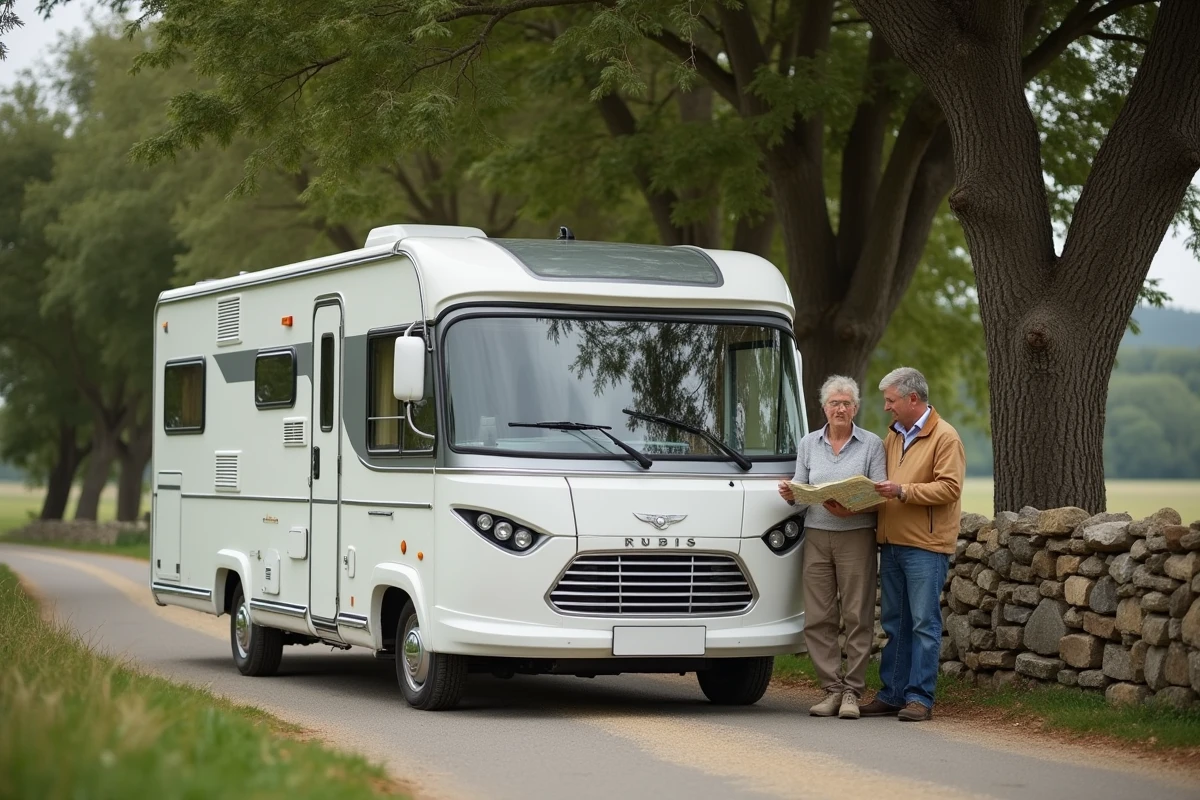
Trigano and the Rubis brand: real positioning in the group’s portfolio
Trigano operates several caravan brands (Sterckeman, Caravelair, La Mancelle, among others). Rubis occupies a distinct segment: that of lightweight leisure living on wheels. The official page of the group classifies Rubis in its caravan section, without highlighting it in commercial campaigns aimed at the general public.
This discretion is explained by the distribution network. Rubis relies on specialized dealers, such as Fabre Caravanes in the Southwest, who ensure sales and after-sales service with a local approach. The business model resembles that of a niche manufacturer rather than a volume brand.
The current range includes several references, from Rubis 310 to Rubis 495 M. The 2026 collection introduces fully electric versions (heating, water heater), confirming the residential orientation. A model like the 495 M includes a large shower and a studio-type layout, designed for prolonged daily use.
Rubis living caravan: regulatory constraints that mainstream articles ignore
A living caravan does not have the same legal status as a touring caravan. The distinction impacts location, taxation, and technical obligations.
Under French law, parking a caravan as a primary or secondary residence on private land is subject to specific urban planning rules. Beyond a certain duration of continuous parking, a prior declaration or a development permit may be required according to the local urban planning plan.
- Connection to networks (water, electricity, sanitation) must comply with current standards, often requiring land development work.
- Road approval remains mandatory even for sedentary use: the vehicle must retain a valid registration certificate and up-to-date technical inspection.
- Housing tax or property tax may apply depending on the duration and conditions of installation, a point rarely addressed by dealers.
By explicitly positioning itself as a “living caravan,” Rubis targets an informed audience aware of these constraints. The technical discourse on the official site (reinforced waterproofing, XPS insulation, rot-proof materials) directly addresses the requirements for four-season use.

Rubis second-hand market: what the circulation of ads reveals
Rubis caravans regularly appear on second-hand platforms, indicating a significant circulation despite the brand’s low media visibility. We recommend particular vigilance on several points when acquiring a used model.
The condition of the polyester base is the first reliable indicator. A reinforced polyester in good condition guarantees the absence of infiltration through the floor, the most costly pathology to address on a living caravan. Also check the color of the insulation visible at the technical hatches: a blue XPS (Styrofoam) confirms an insulation that meets Rubis specifications.
- Check the glued aluminum profile joints: a detachment indicates a loss of lateral waterproofing.
- Inspect the polyester roof for any micro-cracks, especially on models that have been parked in full sun for several years.
- Ensure that the registration certificate mentions Trigano as the manufacturer, which authenticates the vehicle’s origin.
A well-inspected used Rubis retains its residential qualities as long as the composite structure has not been altered by non-compliant repairs. Specific parts can be ordered through the network of authorized dealers.
The relative rarity of Rubis in the new market fuels a stable second-hand value. Recent models, especially those equipped with fully electric features, find buyers quickly, leaving little room for negotiation on well-documented ads.