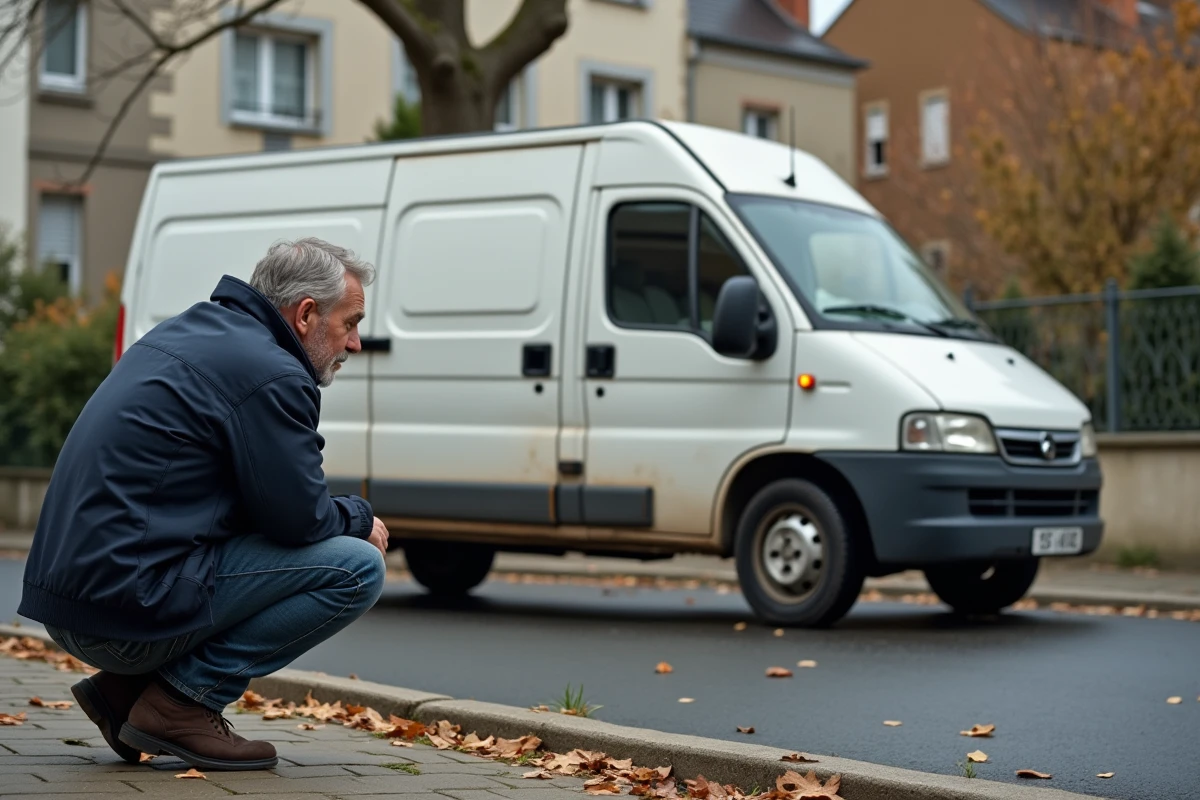
The market for used vans under 1,500 euros is almost exclusively limited to vehicles from before 2012, showing high mileage and often sold in a condition that requires repairs. On Leboncoin or L’Argus, the lower end of the market revolves around 1,000 to 1,500 euros for Kangoo I, Berlingo I, Partner I, or Transit Connect models that are over fifteen years old.
At this price level, the question is not about finding a perfect utility vehicle, but about identifying those that present the least risk of major mechanical issues.
Technical inspection of old vans: the filter that no one bypasses
Even before comparing models, one parameter eliminates a significant portion of low-budget listings: the technical inspection. Feedback from professionals dealing with low-priced used vehicles in 2024 indicates a notable increase in technical inspection failures for older vans, particularly due to chassis corrosion, brakes, and pollution.
In practice, many vehicles listed for less than 1,500 euros are not drivable without costly repairs. Replacing brake lines or treating structural corrosion can alone exceed the vehicle’s value. Checking the date and result of the last technical inspection is not generic advice: it is the first real elimination criterion.
Classic guides often mention mileage and maintenance records as key benchmarks. However, they overlook this ground reality: on a utility vehicle fifteen years or older, it is corrosion and the condition of safety components that kill the deal, not the odometer. A Berlingo I with 200,000 kilometers and a sound chassis is worth more than a Kangoo with 140,000 kilometers that is rusted out under the floor.
Among the resources that sort this segment by budget, the selection of used vans at 1500 euros on Autoscope distinguishes models based on their actual condition, not just their face value.
Kangoo, Berlingo, Partner: actual reliability based on engines and model years
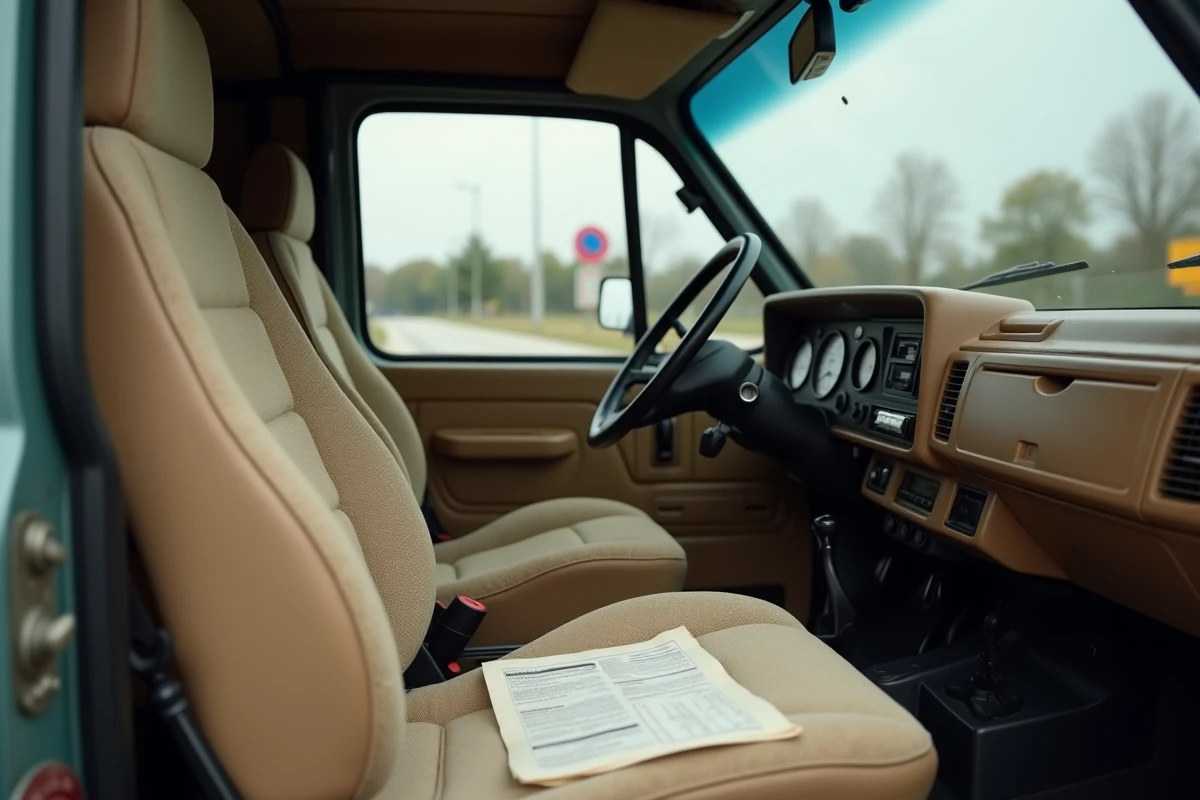
The three names that consistently come up in this price range are the Renault Kangoo I, the Citroën Berlingo I, and the Peugeot Partner I. All three share a compact format suitable for urban or peri-urban use, a simple diesel engine, and a wide availability of spare parts.
Their reputation for robustness is generally justified, but it masks notable differences depending on the engines and years.
Renault Kangoo I: distinguishing the model years
The Kangoo I remains one of the most common low-priced utility vehicles. However, since 2024, several field analyses have identified certain model years of the Kangoo I as problematic due to recurring failures in injectors and engine electronics. For a vehicle purchased around 1,200 euros, a new set of diesel injectors often represents a bill that exceeds the vehicle’s value.
The 1.5 dCi engines from the earlier generations are the most exposed. The 1.2 or 1.4 petrol versions present less risk of major failure but consume more, which impacts the operating budget.
Citroën Berlingo I and Peugeot Partner I
The Berlingo I and Partner I share the same PSA platform. The 1.9 D (naturally aspirated, without turbo) diesel engine is known for its mechanical longevity. It is probably the most predictable powertrain at a very low budget: few electronic components, no turbo that could fail, and a clutch that is relatively accessible to replace.
The more recent 1.6 HDi offers better performance but introduces a particulate filter and high-pressure injection that complicate low-cost maintenance. At under 1,500 euros, opting for a 1.9 D simplifies the equation.
Ford Transit Connect diesel: a less common but solid alternative
The first-generation Ford Transit Connect (2002-2013) appears less frequently in French listings at this price level but deserves attention. Its 1.8 TDCi engine is robust, and the availability of Ford parts remains decent thanks to the independent network.
The main weak point of the older Transit Connect concerns the manual gearbox, whose gearshift can become imprecise beyond a certain mileage. A quick inspection during the test drive (smooth gear changes, no grinding noises) is enough to spot the issue. In comparison, the clutch is more expensive to replace than on a Berlingo.
What makes a low-priced utility vehicle truly usable on a daily basis
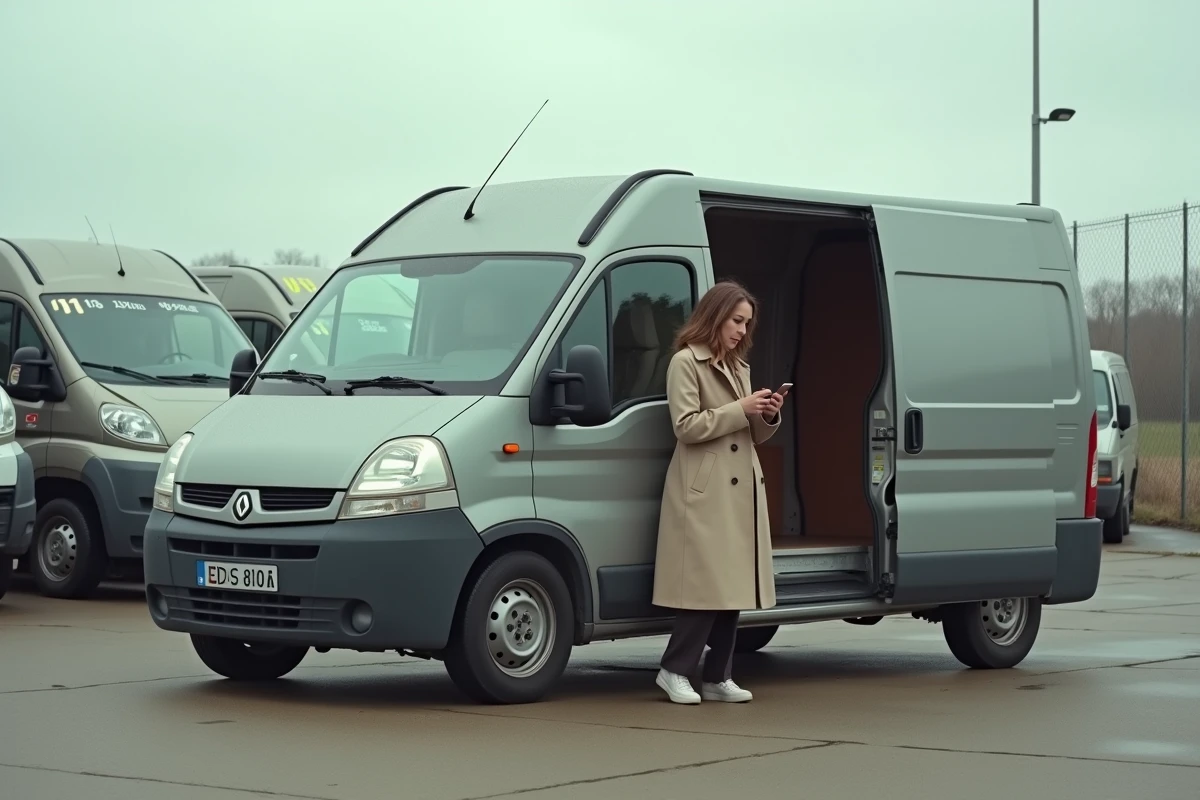
Beyond the model, three practical points separate an exploitable utility vehicle from a financial black hole at this budget level.
- The condition of the suspension and bushings: on a vehicle that has carried loads for years, these parts are often the first to wear out. Their replacement remains affordable, but a vehicle that needs a complete overhaul of its suspension quickly accumulates several hundred euros in repair costs.
- The presence or absence of a turbo: a naturally aspirated diesel engine (like the 1.9 D PSA) eliminates the risk of turbo failure, which represents one of the most expensive breakdowns on older utility vehicles.
- The type of gearbox: a five-speed manual gearbox remains the only reliable option in this price range. The few utility vehicles with automatic or robotic gearboxes at this price point present disproportionate repair risks.
Comfort and equipment hardly weigh in the decision. At this price, air conditioning rarely works, the radio is often missing, and the upholstery is worn. What matters is that the vehicle passes the technical inspection, starts every morning, and does not generate unexpected costs exceeding its value.
A used utility vehicle under 1,500 euros will never be a risk-free purchase. The available data does not guarantee that a specific model will last three years without issues.
What can be said is that a Berlingo I in 1.9 D with a recent technical inspection and a sound chassis remains, in 2026, the least risky profile for a small budget. The Kangoo I in petrol and the Transit Connect in 1.8 TDCi complete the picture, provided that the specific weak points of each model are inspected before signing.